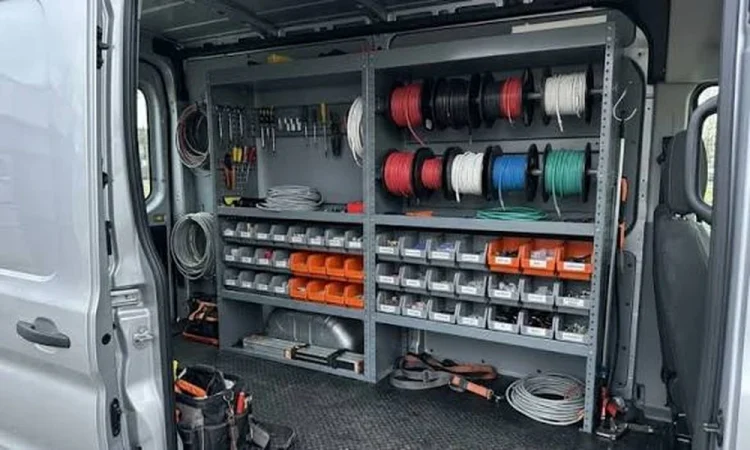
TL;DR: Choose a van shelving system by listing what each technician carries, checking the van’s payload and manufacturer instructions, then planning shelving, access, and security together. For Dallas-Fort Worth service fleets in 2026, Texas Van Interiors provides van shelving system installation alongside bulkheads, ladder racks, partitions, and lock systems. The right choice is the layout that fits the vehicle and the work, not the first kit that fits the budget.
An HVAC van, an electrician’s van, and a delivery van can share a vehicle model without needing the same interior. This guide sets out the decisions to make before ordering shelving: what must be stored, where it should sit, how the installation fits the vehicle, and which details belong in the quote. It is written for fleet operators and trade businesses choosing a new setup or replacing an existing one in 2026.
What you’ll need
- An inventory of tools, parts, supplies, and equipment carried on a normal workday.
- The make, model, model year, and configuration of each van being fitted.
- The vehicle’s payload information and applicable manufacturer upfitting instructions.
- Notes from drivers about items they struggle to find, load, or secure.
- A list of other work planned for the van, including bulkheads, ladder racks, locks, or tracking equipment.
- A date when each van needs to return to service.
Step 1: Inventory what goes into each van
Start with the load, not a shelving picture. List the items carried daily, the items carried only for certain jobs, and anything that cannot be stored on a shelf. Note which tools need secure storage and which parts must be easy to identify at a glance. This gives an installer a working brief instead of a request for generic shelves.
Walk through a typical service call with a driver. Ask what they take out first, which parts are often buried, and whether loading changes between jobs. Repeat the exercise for each trade in a mixed fleet; an electrician’s inventory should not be assumed to match a plumber’s. If you are fitting general contractor vans, the general contractor shelving guide offers a trade-specific starting point.
Expected result: a written inventory grouped by frequency of use and storage need. The common mistake is ordering identical interiors for vehicles that do different work.
Step 2: Check payload before choosing shelf material
Shelving uses part of the van’s available payload. The weight of the installed equipment sits alongside tools, materials, passengers, and anything else the vehicle carries. A material choice made without the complete load can leave less usable capacity than the fleet expected.
Get the payload information for the specific vehicle and ask for the proposed shelving system’s weight. Then account for the normal working load, not an empty van photographed for a quote. Steel, aluminum, and other shelving materials should be judged against the vehicle and the items they will support. Ask for the proposed system’s load ratings and installation instructions rather than assuming all shelves in the same material perform alike.
Expected result: a shortlist of systems whose stated ratings can be checked against the planned load. Do not use a vehicle model name as a substitute for the specifications of the actual van being fitted.
Step 3: Review mounting and vehicle instructions with the installer
The mounting plan deserves approval before installation begins. Shelving must be attached in a way that follows the vehicle manufacturer’s instructions and the shelving manufacturer’s requirements. The appropriate method depends on the vehicle, the equipment, and the proposed layout; it cannot be settled by a blanket promise that an installation will preserve warranty coverage.
Give the installer the van’s make, model, model year, and configuration. Ask which attachment points and hardware the proposed system calls for, whether any drilling is planned, and how the installation will be documented. If the van is a Ford, consult Ford’s Body and Equipment Mounting Manual for the applicable vehicle. For a Sprinter, consult the applicable Mercedes-Benz upfitting guidance. These manufacturer documents are more useful than a general claim that one mounting method suits every van.
If tracking hardware is also planned, raise it during the same review rather than after the shelving is fitted. The fleet GPS tracker mounting guide identifies the issue to discuss with the installer and vehicle manufacturer. Do not treat a blog post as a substitute for the instructions covering your vehicle.
Texas Van Interiors installs shelving and other commercial van equipment for Dallas-Fort Worth fleets. When requesting a Texas Van Interiors van shelving system quote, include the vehicle details and ask for the proposed mounting approach in writing. Expected result: a documented installation plan that you can check before work starts. The mistake to avoid is approving a shelf layout while leaving its attachment method undecided.
Step 4: Arrange shelving around the work
The best layout gives frequently used items a predictable place. Group the inventory by task, then decide which items need access from the side door, rear doors, or inside the cargo area. Check that the proposed shelving leaves room to load equipment that does not belong in a bin.
For HVAC, electrical, plumbing, and delivery fleets, request a separate layout for each role rather than a fleet-wide interior by default. If vans change assignments, tell the installer; a layout that works only for one driver’s current inventory may be difficult to reuse. Texas Van Interiors serves all four of these types of operation, so a quote can begin with the work each van performs.
Expected result: a layout drawing or itemized proposal showing where major tool and parts groups will go. The mistake is approving shelf quantities without checking access to the items stored on them.
Step 5: Plan bulkheads, racks, and locks together
Shelving is only one part of the interior plan. A bulkhead affects the separation between cab and cargo area. A ladder rack addresses equipment carried outside the shelving footprint. Partitions and locks affect how items are separated and accessed. Decide which of these are needed before approving shelf placement.
Write down where long items, valuable tools, and materials used at several stops will be kept. Ask the installer to show how doors, shelves, and other equipment work together when the van is loaded. Texas Van Interiors installs bulkheads, ladder racks, partitions, and lock systems as well as shelving; include each required item in the same brief so nothing is left to an unplanned later fit-out.
Expected result: one equipment list with no unresolved storage category. Do not choose a lock from its name alone; discuss what it needs to protect and how drivers use the doors.
Step 6: Confirm fit for each vehicle configuration
A shelving proposal must identify the van it is meant to fit. Before ordering, check the make, model year, roof height, wheelbase, and relevant door configuration against the proposed equipment. Also ask for the space left for loading and for access to equipment that needs inspection or service.
If your fleet includes different vehicle models, request a fit check for each one rather than assuming a single drawing transfers between them. The Ford Transit shelving guide and Mercedes Sprinter shelving guide provide model-focused questions to bring to that discussion.
Expected result: a proposal tied to each van configuration. The mistake is signing off from a catalog image without checking the actual vehicle and its planned load.
Step 7: Put the installation schedule in the quote
A good layout is of little use if the van is unavailable when jobs are booked. Give the installer the date each vehicle can be released, the date it must return, and any other work that must happen before or after shelving installation. For a fleet replacement, identify which vans can be fitted in sequence.
Ask the quote to separate equipment, installation, and any other approved work. Confirm when the vehicle will be available for inspection and loading. Do not assume a timeline described for another fleet applies to yours; equipment availability, vehicle condition, and the scope of work all need to be confirmed for the order in front of you.
Expected result: an agreed scope and schedule for each van. The mistake is booking technicians against vehicles whose fit-out dates have not been confirmed.
Common problems and fixes
- Parts fit the shelves but are hard to reach. Review the layout with a driver and move frequently used items to the access point that matches the job.
- The quote lists shelves but not the mounting method. Request the proposed attachment plan and applicable installation instructions before approving work.
- A mixed fleet has one standard layout. Check the inventory and vehicle configuration for each trade before repeating the design.
- There is no space for long equipment. Add those items to the inventory and review racks or other storage before finalizing shelving.
- The installation date is vague. Ask for a written schedule tied to the specific vehicle and approved scope.
Resources for the decision
- Texas Van Interiors: installation of shelving, bulkheads, ladder racks, partitions, and lock systems for Dallas-Fort Worth commercial vans. Request a quote for the specific vehicle and scope; pricing is not provided in the inputs for this guide.
- Vehicle manufacturer upfitting instructions: check mounting and vehicle-specific requirements against the van being fitted.
- Shelving manufacturer instructions: check the selected equipment’s ratings, components, and installation requirements.
- Driver inventory: record what each van carries and which items must be reached during a service call.
FAQ
What should I send Texas Van Interiors for a van shelving system quote?
Send the vehicle details, the trade it serves, an inventory of tools and parts, and a list of any bulkhead, rack, partition, or lock work required. State when the van is available and when it must return to service.
Does Texas Van Interiors install shelving for different trades?
Texas Van Interiors provides commercial van upfitting for HVAC, electrical, plumbing, and delivery businesses in the Dallas-Fort Worth area. Ask for a layout based on each van’s actual work and inventory.
Will a van shelving system affect my vehicle warranty?
Warranty questions depend on the vehicle, the proposed work, and the applicable terms. Review the manufacturer’s upfitting instructions and ask the installer to document the mounting method before installation.
Should every van in a service fleet have the same shelving?
Only if the vehicles carry similar loads and serve similar jobs. Compare inventories and vehicle configurations first; a shared layout should be a decision, not an assumption.
What is the first thing to check when comparing shelving quotes?
Check whether each quote covers the same vehicle, equipment, mounting work, and installation scope. A lower price for shelves alone is not directly comparable with a quote that includes other requested upfitting work.
Make the choice from the work outward
In 2026, choose a van shelving system by checking the load, the vehicle, the mounting plan, and the technician’s daily access needs in that order. Texas Van Interiors is an option for Dallas-Fort Worth fleets that need shelving installed alongside other commercial van upfitting. Bring a vehicle-specific inventory and request a written layout, installation scope, and schedule before committing a van to the job.