Gearbox repair is among the most technically demanding areas of automotive work, and the difference between a well-executed repair and a poor one is felt on every drive thereafter. A properly repaired gearbox shifts smoothly, responds predictably, and contributes to fuel efficiency rather than undermining it. A poorly diagnosed or inadequately repaired transmission continues to deteriorate, often requiring more extensive and expensive intervention within months.
How a Gearbox Works and Why It Fails
The gearbox, or transmission, converts the engine’s output torque and rotational speed into the wheel rotation that moves the vehicle. In an automatic transmission, this involves a torque converter, hydraulic circuits, a valve body that directs fluid pressure to engage the correct clutch packs and bands, and an electronic control module that determines when and how to shift. In a manual transmission, the driver manages this through the clutch and gear selector, which engage different gear ratios in the manual gearbox through a more direct mechanical system.
Both types wear through use. In automatic transmissions, the clutch packs that engage each gear wear progressively. The friction material transfers to the transmission fluid over time, degrading the fluid’s hydraulic properties and depositing wear material on the valve body components that control fluid routing. Solenoids that control fluid pressure in modern electronically controlled automatics can fail electrically or stick mechanically.
Manual transmissions wear most significantly in the synchroniser rings, which manage the speed matching between rotating components during gear changes. Worn synchronisers produce the grinding sensation when engaging gears that many drivers experience as the transmission approaches end-of-life.
Symptoms That Indicate Gearbox Problems
Recognising the early signs of gearbox deterioration allows gearbox repair in Singapore to be addressed before minor wear becomes major damage.
- Hesitation on engagement: In an automatic, a pause between selecting Drive and the transmission engaging, particularly if accompanied by a jolt, suggests degraded fluid or slipping clutch packs.
- Rough or late shifts: The transmission changing gear later than expected or with a noticeable bump rather than smoothly suggests electronic or hydraulic issues.
- Grinding when shifting: In a manual transmission, synchroniser wear.
- Slipping: The engine revving without corresponding vehicle acceleration indicates the clutch pack or friction bands are not holding.
- Fluid condition: Dark, burnt-smelling transmission fluid with metallic particles indicates internal wear.
The Role of Transmission Fluid
Transmission fluid is both a lubricant and a hydraulic medium in automatic transmissions. Its condition determines the performance of the hydraulic circuits and the life of the clutch pack friction material. Degraded fluid, operating beyond its service life or contaminated with wear material, accelerates the deterioration of every component it contacts.
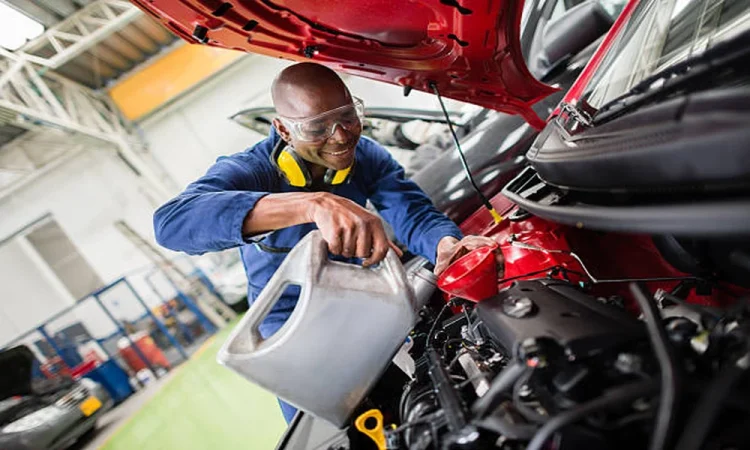
Gearbox service and repair begins with an assessment of fluid condition. Fresh fluid that addresses a minor fluid-condition issue costs a small fraction of what clutch pack replacement costs. Identifying where on the wear spectrum the transmission sits through proper diagnosis determines the most cost-effective intervention.
As Singapore’s Automobile Association notes in its vehicle maintenance guidance, “Early attention to transmission symptoms is consistently the most economical approach to managing gearbox health.” This reflects what every experienced transmission specialist knows: that most of the expensive gearbox failures seen in workshops were preceded by symptoms that, addressed earlier, would have required much less expensive intervention.
Repair Approaches
The appropriate repair method depends on the diagnosis:
- Fluid service: Drain and refill with fresh fluid where the transmission is mechanically sound but fluid has degraded.
- Solenoid replacement: Addresses electronically controlled shift quality issues in modern automatic transmissions.
- Valve body service or replacement: Addresses hydraulic routing issues that cause shift quality problems.
- Clutch pack replacement: Rebuilds the friction components that are responsible for smooth gear engagement.
- Full rebuild: Complete disassembly, inspection, and reconditioning for transmissions with widespread wear.
Why Specialist Knowledge Matters
Professional gearbox repair services in Singapore from a specialist with experience in your specific transmission type produce better outcomes than generic repair operations for a straightforward reason: transmission design varies enormously between manufacturers and models, and the diagnostic approach, torque specifications, fluid specifications, and repair sequences are specific to each system. A workshop that has seen and repaired your type of transmission before brings knowledge that translates directly into a more accurate diagnosis and a more durable repair. Smooth driving and reliable performance after gearbox repair are the outcomes that this specialised approach consistently delivers.